
Before We Forget Olu Jacobs
On memory, ageing, and the slow fading of a cultural authority.

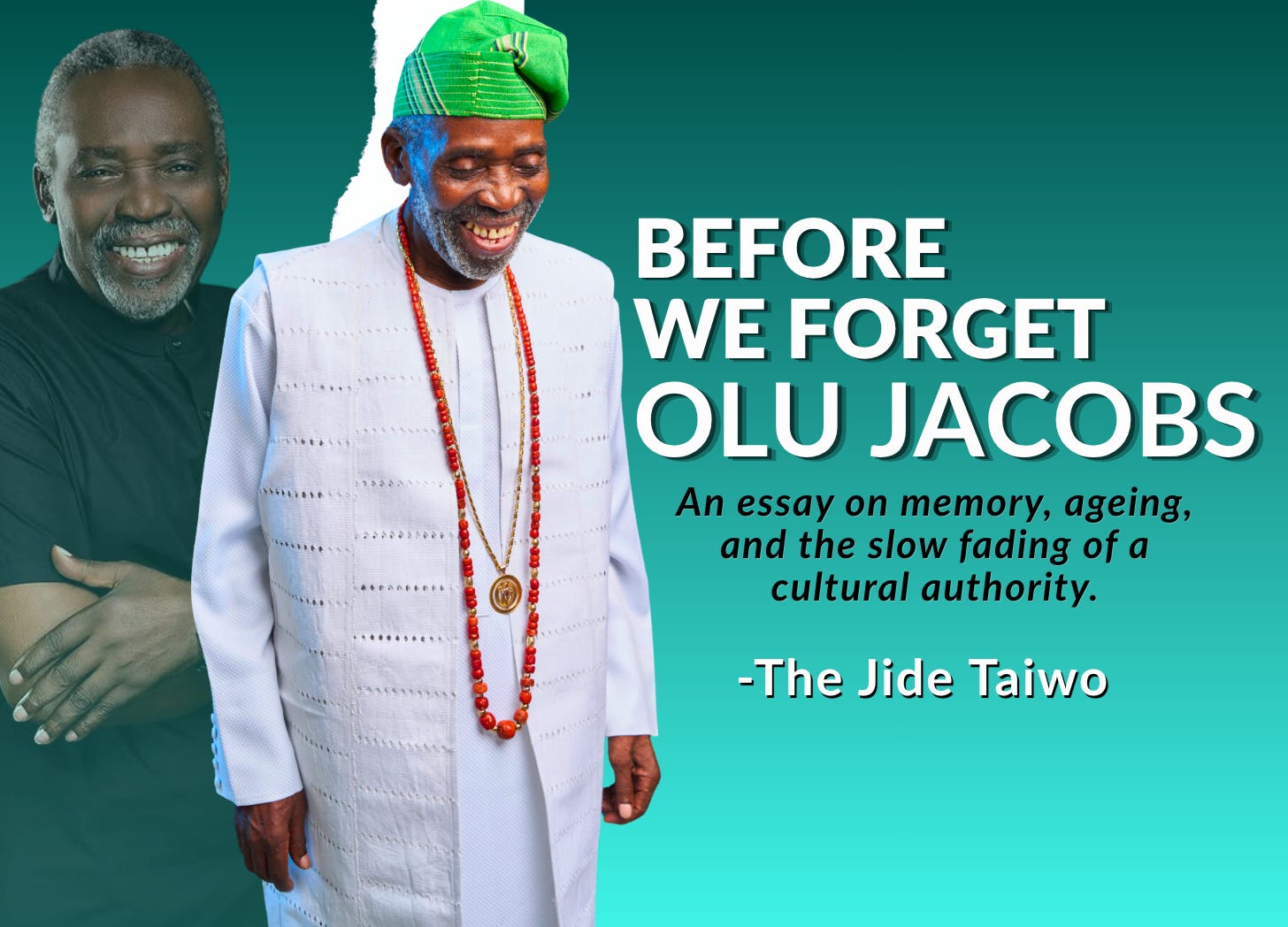
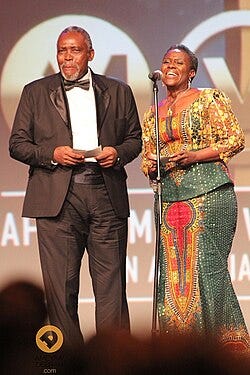
A week ago today, Africa’s filmmaking ecosystem assembled in Lagos, Nigeria, for the biggest movie spectacle on the continent, the Africa Magic Viewers’ Choice Awards. Among the cornucopia of stars that gathered there, the one person who caught this writer’s attention was Joke Silva as she presented the Industry Merit Awards to worthy recipients in Sola Sobowale and Modestus Onyekwere, better known as Kanayo O. Kanayo.
Ms Silva was poised and radiant, gracious as ever. It is a specific kind of presence that the most iconic performers, such as herself, have perfected over long careers. There was something striking about that moment: here was a legend honouring other legends (and both of whom she is older than, by the way), all of them of a generation that built the industry that was now celebrating them.
Thirteen years ago, on that very stage, her husband, Olu Jacobs, had received that same award, but he was not there this year. He hasn’t been there or anywhere for a few years. A little over four years ago, Joke Silva disclosed that her husband had been diagnosed with Lewy body dementia, a degenerative neurological condition. And yet there she was, effervescent in a way that did not suggest any invitation to perform sympathy, or even concern.
It would be easy to read that composure as stoicism, or as the professional reflex of someone who has spent decades under the klieg light. But watching her that evening, I found myself thinking of him also, what it means that his absence from such occasions has become regular and accepted, only to be asked after in the perfunctory manner in which the frenzy of a red carpet and green rooms can allow for. We have grown comfortable with his disappearance. We have made our peace with it, understandably. And that, perhaps, is what this essay is about.
In my book E File Fun Burna: The Incredible Stagecraft of Burna Boy, I described Fela Anikulapo-Kuti as an icon that belongs to the people as much as to his family, if not even more so. Olu Jacobs is one of those people whose faces and lives stop belonging entirely to themselves alone— they become public memory and societal texture; in his case, part of how a society imagines authority, wisdom, and paternal permanence. As much as the audience could know an artiste, the Nigerian audience knew Olu Jacobs as a one-of-one, a measured baritone whose weight is only surpassed by the gravitas of how he delivered his lines and how he carried himself.
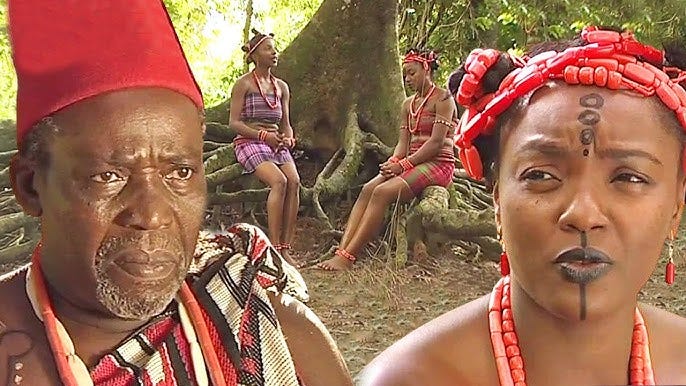
For decades, if a Nigerian film needed a man who could convey various kinds of manly authority, it was him. It didn’t matter if it was drama, epic, or thriller; Olu Jacobs embodied Chief/Igwe/Bishop/President and many more. He was as stern as he was a doting father, a looming figure that needed not to impose to inspire fear or provide comfort.
Beyond being charismatic, which sometimes is the gods’ prerogative to bless whomever they choose with it, Olu Jacobs’ solemnity was due to his training, discipline, and a seriousness about the art that was unusual in a Nigerian industry that was still finding its own shape. He had trained at the Royal Academy of Dramatic Art in London and had moved through the worlds of theatre and international film before returning to Nigeria, where he helped define what Nollywood would become in the coming years. His roles across several decades have ranged from the heroic to tragic, resolute, and, in some cases, morally complex characters. Olu Jacobs made Nollywood feel like it deserved to be taken seriously because he took himself very seriously.
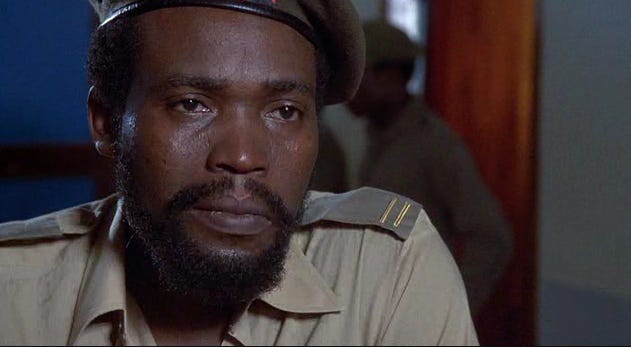
For most Nigerian millennials, he arrived fully formed. Like Morgan Freeman, he was never young on our screens. His first official film production in Nigeria came in 1988, when he was already 46, a man in full, bearing the weight of two decades’ worth of international experience back home with him. He had appeared on British television in the 1970s, in shows like The Professionals and Till Death Us Do Part, and shared a screen with Christopher Walken in Dogs of War. By the time we would meet him in his earliest roles in home video films, he was in his 50s.
What is remarkable, and rarely acknowledged, is the sheer span of history he witnessed as a practitioner. He began on stage and in theatre. He worked in British television when it was one of the few spaces that would take Black actors seriously. He returned to Nigeria and worked in television drama at a time when the medium was the primary vehicle for serious storytelling. Then came the revolution, the rise of straight-to-home video productions in the early 1990s that birthed what the world now knows as Nollywood. He lived through the years of industrial churn, when the industry was producing dozens of films every week, quantity overtaking quality, the market insatiable, and the craft sometimes secondary.
He was there for the cinema rebirth and the new generation of filmmakers who wanted their work on big screens and international festival circuits. And then streaming, and the global audience, and the moment when Nigerian stories began appearing on platforms watched across the world. Olu Jacobs saw all of it, participated in much of it, and survived the entirety of it. Very few figures in any national film career can claim that kind of unbroken witness across so many eras of an industry’s life.
Which is part of why his illness sits so uneasily in our collective imagination.
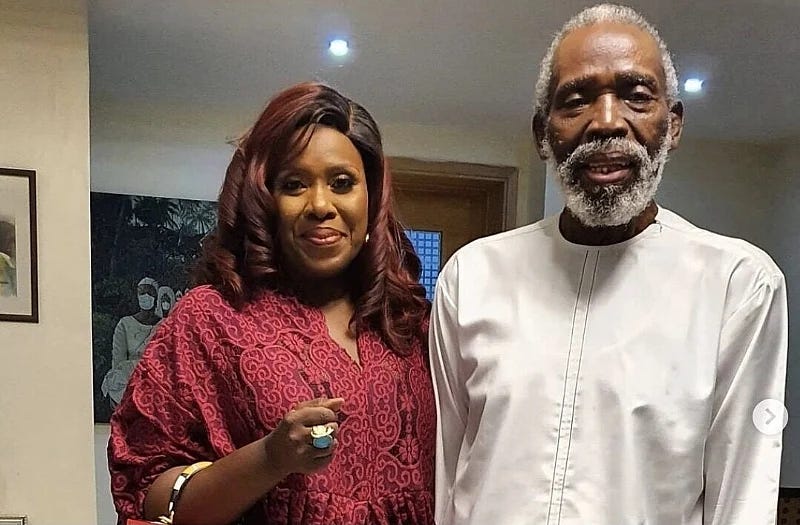
In recent years, public conversations around Olu Jacobs have increasingly centred not on cinema, but on health: his own. In 2021, his wife, Joke Silva, revealed that he had been battling with Lewy body dementia, a specific type of degenerative illness that affects movement, cognition, memory, and perception. He’s been seen publicly only a handful of times since then.
False reports of his death periodically spread across social media, triggering waves of grief before being denied. Each time, fans express their grief widely, not because they wish he were already gone, but for many of them, his dying means coming to terms with losing him as they have in these past five or so years.
Ms Silva has allowed us that much, and in going public about the diagnosis, she took on a role she carries with remarkable grace: spouse, interpreter, and — in the most generous sense of the word — his custodian.
I understand something of that role, at a much smaller scale. Four years ago, my mother had a stroke. She is alive, recovering in the incomplete way that strokes allow, and the woman who was once fiercely active and stubbornly independent now requires the kind of daily care she would once have refused with great firmness. I see, watching her, that her frustration seems less about the illness itself than about the inhibition. The frustration is with the body’s new refusal to do what she tells it to, the gap between intention and motion, the indignity of being tended to when she spent a lifetime doing the tending. She knows who she is, and she knows what she has lost. That awareness is its own particular grief.
Dementia removes even that. I find myself thinking about Olu Jacobs in those terms. His condition does not preserve the self as a frustrated witness to its own limitation. It dismantles the self more stealthily and more completely. There are moments, those who care for people with infirm parents will tell you, when something returns, like a flash of recognition, a memory surfacing briefly like something recalled mid-sentence, before receding again. One tries to imagine what those moments hold for a man of his interior life. Whether, in the interval between one fade and the next, something of the actor remains: the timing, the instinct, the knowledge of how to hold a room. Whether any of it is still in there, occasionally, before it goes again.
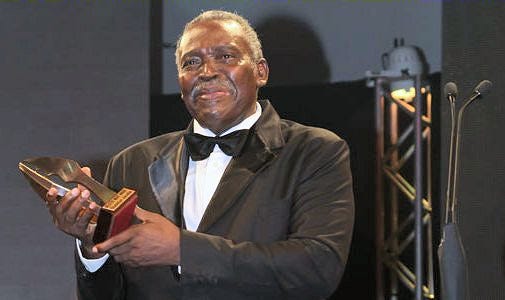
Dementia must be especially difficult for an actor. Actors trade in memory. They memorize scripts, inhabit identities, recall emotional truths, and preserve moments onscreen. Their faces become archives through which audiences remember entire eras of their own lives. To watch a legendary actor experience memory loss feels, in some strange way, like witnessing a library begin to burn slowly from the inside. This is the tragedy that sits beneath the public grief; we not only mourn the end of a career, but we mourn also the gradual erosion of a person from the inside, in a way that those who love him can only witness.
**
Nigeria is not always kind to its living elders. Brilliance is celebrated intensely while it remains commercially useful, then glibly set aside once age removes it from the cycle of visibility. The entertainment industry compounds this, structured around newness, around the next sensation, around an attention economy that rewards immediacy over senescence. In that context, ageing can begin to resemble disappearance in its gradualness. Slowly, the legend recedes, and the name appears less frequently. A generation of younger audiences encounters it only in retrospectives, if at all.
We save our flowers for funerals. We write our tributes in the past tense. We celebrate after the fact, when the person who deserved the celebration can no longer receive it. It is a pattern so familiar it has almost stopped being noticed: the legend grows louder in death than it was in life. We trade in platitudes after people die but are callous to the living. Most tragically, this is a human flaw that cannot be remedied, as opposed to if it were a deliberate erasure.
But Olu Jacobs belongs to a generation that cannot be understood merely through celebrity. He belongs to an era of performers who cultivated mystique through restraint, something the present moment finds difficult to replicate. They were visible without being overexposed. They commanded respect without demanding constant attention. Long before social media converted public life into a project of endless self-documentation (and promotion), his generation understood that authority, properly held, did not need to announce itself. When one looks at it like that, it underscores the cruel irony of his dealing with dementia in his twilight years.
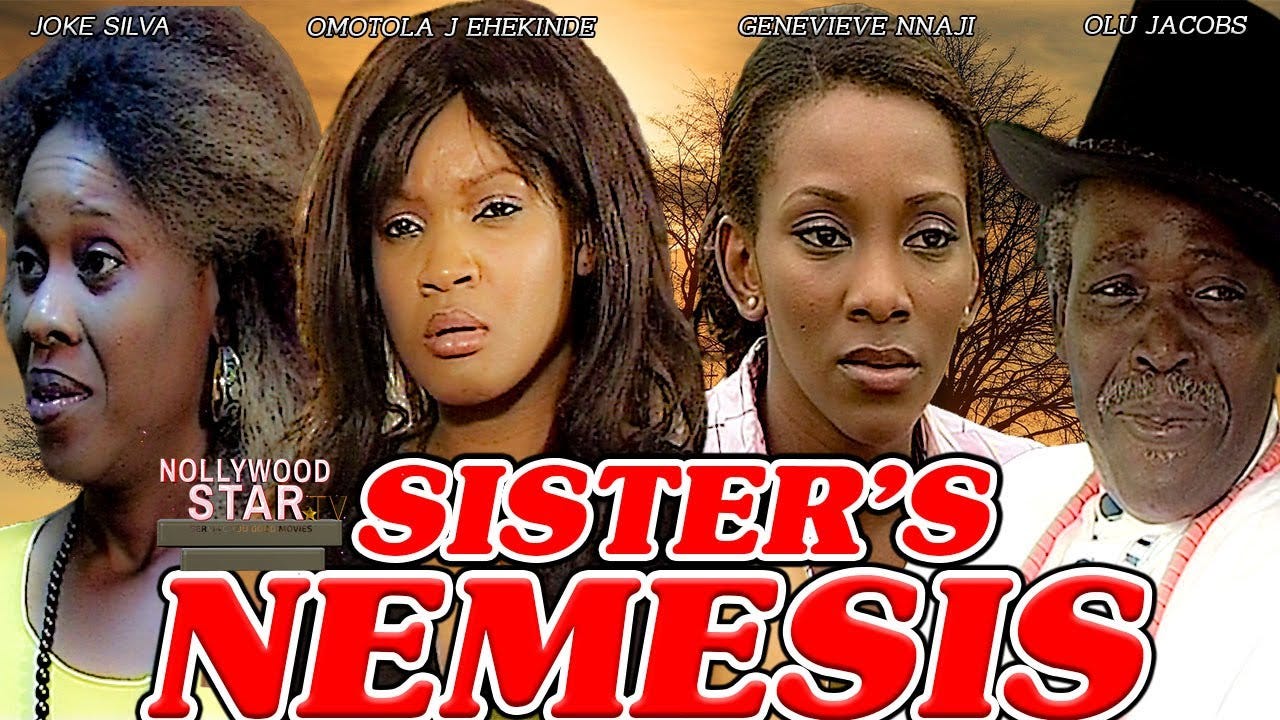
The tenderness with which Nigerians respond to any mention of him now is worth taking seriously as cultural data. People who never met him, who know him only through screens, speak about his condition with a personal grief that moves well beyond celebrity attachment. What they are really circling is the possible loss of one of the living containers of national memory, someone whose work became so embedded in domestic life that forgetting him feels, obscurely, like forgetting something about themselves. His performances were tied to specific rooms and television sets, to family evenings across multiple decades, to the particular glow of a screen while the generator hummed outside. A generation of Nigerians learned something about dignity from watching him, without ever being told they were learning it.
Through decades of political instability, economic uncertainty, military rule, democratic transition, VHS-era Nollywood, and the digital age, his image remained familiar and constant. His performances became embedded in domestic memory: television sets glowing in sitting rooms, VCDs stacked beside stereos, families gathered together after dinner, generations sharing the same stories.
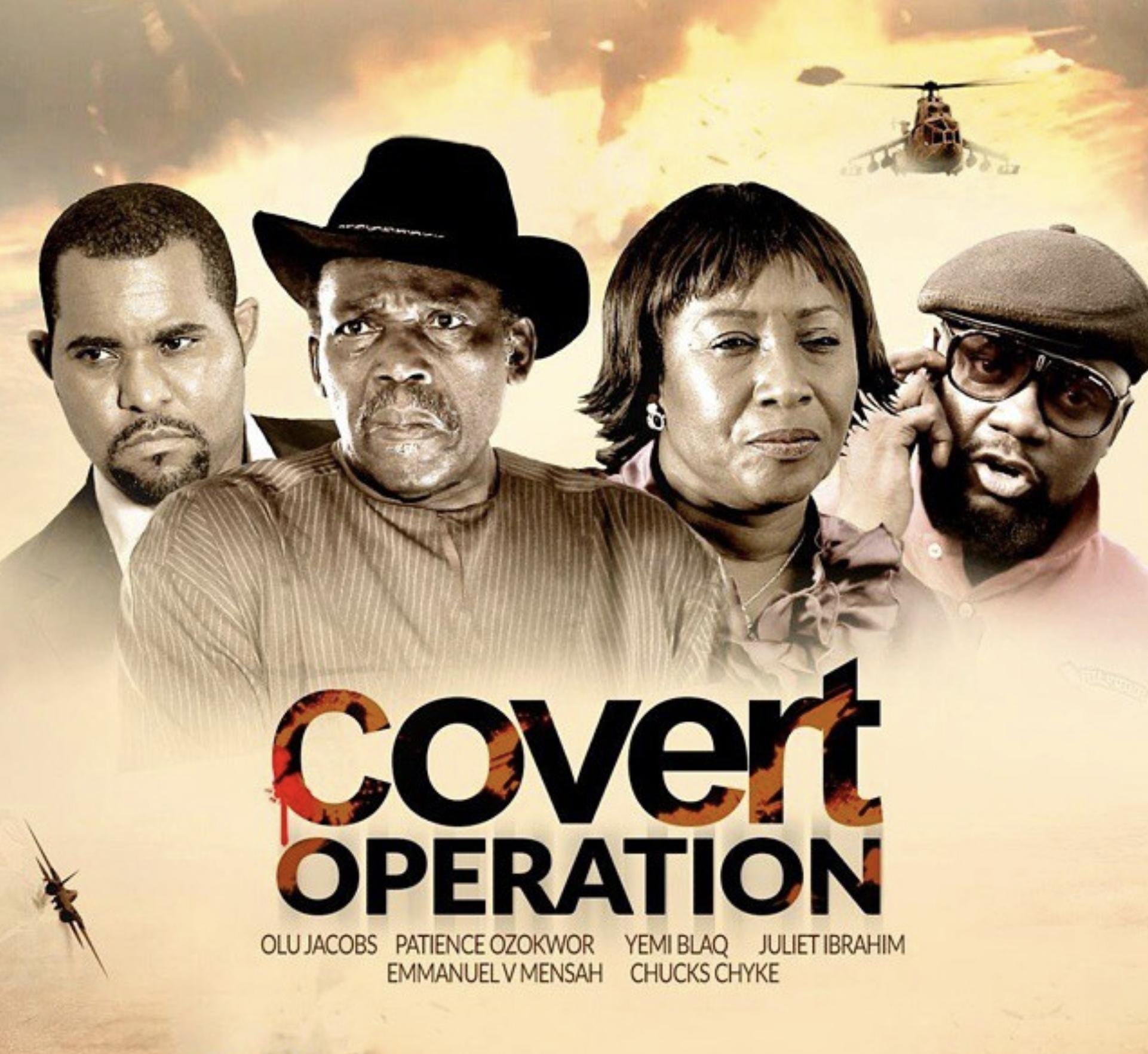
And perhaps that is the strange consolation at the centre of this story. Dementia may disrupt personal memory, but film preserves another kind entirely. Long after the mind falters, the image remains. The voice remains. The gestures remain, and archives remember what the body no longer can. The art of filmmaking makes it such that his life’s work is documented somewhere, ensconced in reels and hard drives. There is an immortality that awaits artistes, and Olu Jacobs will not be denied it.
So yes, there is a version of this essay that waits. There’s a version of it that holds itself in reserve until the confirmed news arrives, and then is released when the grief is formalized, his career summarised, and his legacy declared safe for the history books. That essay will be written. Many versions of it will be written. They will be warm, and accurate, and, to me, a little too late.
This is not that essay. This is the one written while he is still here, while the record is still open, while there is still something meaningful in saying: we remember. We remember the voice. The stillness. The way he made a scene feel like it had consequence. We remember Rapture and Royal Palace. We remember Beauty and the Beast. We remember Oloibiri and The Royal Hibiscus Hotel. We’re lucky to have curators who post clips of his roles on British television on Instagram and TikTok. Most importantly, we remember what it meant to see that kind of seriousness on a Nigerian screen, and its message to successive generations of actors and filmmakers that their work could aspire to something true and lasting.
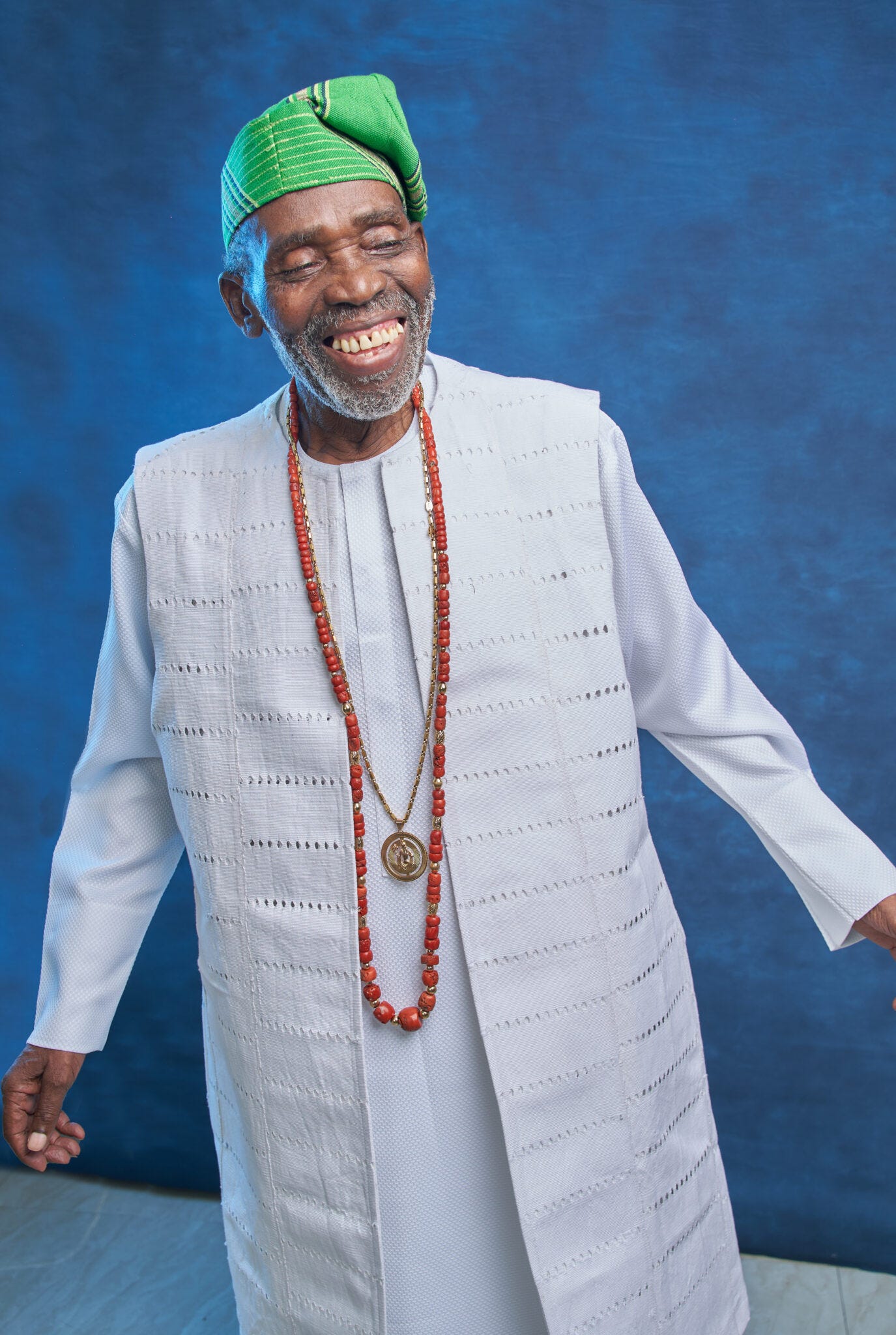
That memory, it turns out, is not only personal. It is collective, and it requires maintenance. It requires people who choose, deliberately, not to wait, and who understand that the tribute paid to a living legend lands differently from the one placed at a grave. Cultural memory does not sustain itself passively. It requires people who choose, deliberately and while there is still time, to insist on it. To resist the shorthand that reduces a life’s work to a tribute post only after death has already converted the person into a monument.
Olu Jacobs is not gone (yet). Before we lose him — before the industry loses the habit of speaking his name, before the disease takes what remains, and before we forget him, let us say clearly what he was, and is, and meant.
He was the best of what Nollywood could be. He is, still, a reason to believe that Nigerian storytelling was always worthy of its own reverence.
We should not wait to say so.
I remember as a child when I started cultivating my dream to work in film, I would pray seriously to God to have him in my movies.
He truly made Nigerian cinema an experience! I truly enjoyed this article, thank you🫶🏾
Appreciate this 🙏🏿